
In the intricate dance of philanthropy and finance, scholarships emerge as a powerful nexus, connecting generous giving with ambitious financial pursuits. These scholarships are more than financial aids; they are transformative tools reshaping the lives of individuals and, by extension, their communities. They represent a unique intersection where philanthropic intentions meet financial aspirations, creating a synergy that propels students into realms of education and career opportunities previously beyond reach.
The Role of Philanthropy in Finance Education
Philanthropy as a Catalyst in Finance Learning
The world of finance education is increasingly influenced by the touch of philanthropy. Charitable foundations, private benefactors, and corporate entities are recognizing the value of investing in the financial intellect of future generations. These philanthropic endeavors are not just funding education; they are actively shaping it, aligning scholarship programs with contemporary financial challenges and emerging market needs.
Unlocking Doors to Education and Opportunity
For many aspiring finance professionals, scholarships are the key to unlocking educational opportunities. They provide a gateway to prestigious programs, intensive training, and global networking platforms, all of which are crucial for launching successful careers in finance. By democratizing access to top-tier finance education, these scholarships play a pivotal role in fostering a diverse and dynamic financial workforce, ready to tackle the complexities of modern economies.
How to Find and Apply for Philanthropic Finance Scholarships
Navigating the Path to Scholarship Success
Embarking on the journey to secure a philanthropic finance scholarship begins with a diligent search. Prospective students should explore scholarship databases, university financial aid resources, and industry-specific platforms to identify opportunities aligned with their goals and qualifications.
Crafting a Standout Application
When applying for these scholarships, the key lies in creating an application that resonates with the philanthropic mission of the grantor. This involves more than academic excellence; it calls for a compelling narrative. Applicants should craft personal statements that not only highlight their financial acumen but also reflect their commitment to using their education for broader societal benefit. Project proposals, if required, should be innovative, feasible, and aligned with current financial trends and needs.
In addition to these elements, attention to detail in the application process – adhering to deadlines, meeting all requirements, and presenting a polished, professional package – is crucial. The application should be a mirror reflecting the applicant’s potential as a future leader in finance, underscored by a clear vision of how the scholarship will propel their career and contribute to the field.
Embracing a New Era: Philanthropy’s Progressive Shift in Finance Education
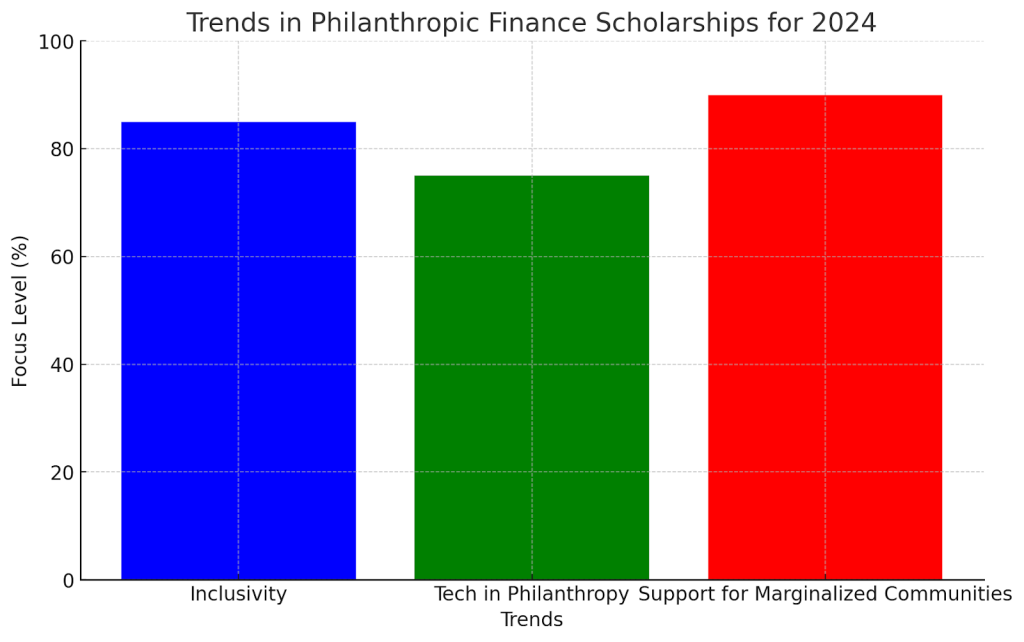
In the rapidly changing landscape of philanthropy, a significant shift is evident in the focus areas of finance scholarships. The bar chart above succinctly captures this evolution, emphasizing three critical trends for 2024: Inclusivity, Technology in Philanthropy, and Support for Marginalized Communities.
Inclusivity, with a focus level of 85%, underscores a growing recognition of the need for diverse perspectives in the finance sector. This trend reflects a concerted effort to ensure that finance education and opportunities are accessible to a broader spectrum of individuals, breaking down traditional barriers and fostering a more inclusive environment.
The integration of Technology in Philanthropy, at a 75% focus level, highlights the increasing importance of technological advancements in shaping philanthropic efforts. This trend suggests that finance scholarships are increasingly geared towards equipping students with the skills and knowledge to navigate and lead in a digitally-driven financial landscape.
Support for Marginalized Communities, with the highest focus level at 90%, indicates a strong commitment to uplifting those who have been historically underrepresented in finance. This trend is critical in democratizing access to finance education, providing opportunities for individuals from varied backgrounds to contribute their unique insights and experiences to the industry.
Together, these trends paint a picture of a philanthropic sector that is not only adapting to the changing times but is also proactively shaping a more equitable, technologically savvy, and inclusive future in finance education. As these trends continue to evolve, they promise to open new doors and create a diverse array of opportunities for aspiring finance professionals.
Notable Philanthropic Finance Scholarships
In the realm of finance education, several philanthropic scholarships stand out for their commitment to nurturing future financial leaders. Here is a selection of prominent scholarships that have made a significant impact.
The Rhodes Scholarship – Economics and Finance Stream
One of the most prestigious scholarships globally, the Rhodes Scholarship for Economics and Finance, provides full funding for students to pursue their studies at the University of Oxford. This scholarship is known for its rigorous selection process, focusing on academic excellence, leadership potential, and commitment to making a difference in the world.
The Point Foundation Scholarship for LGBTQ Finance Students
This scholarship is dedicated to supporting LGBTQ students pursuing finance or related fields. It offers not only financial assistance but also mentorship, leadership development, and community service opportunities. Applicants are evaluated on their academic achievements, leadership skills, and involvement in the LGBTQ community.
The FINRA Foundation Scholarship
Sponsored by the Financial Industry Regulatory Authority (FINRA), this scholarship supports individuals studying finance, business, or economics. It aims to foster a deeper understanding of regulatory and ethical practices in finance. The scholarship is open to undergraduate and graduate students, with awards based on academic performance and demonstrated interest in the finance industry.
Future Trends in Philanthropic Finance Scholarships
Navigating the Evolving Landscape of Finance Education
As the finance industry continues to evolve, so do the trends in philanthropic finance scholarships. There is a growing emphasis on sustainable finance, reflecting the industry’s increasing focus on environmental, social, and governance (ESG) factors. Scholarships are being tailored to support students who are interested in developing sustainable finance models and ethical investment strategies.
Embracing Financial Inclusivity
Another emerging trend is the focus on financial inclusivity. Scholarships are increasingly targeting underrepresented groups in finance, aiming to diversify the talent pool and bring varied perspectives to the industry. This shift is not just about providing opportunities; it’s about enriching the finance sector with a wide range of insights and experiences.
Technology and Innovation in Finance
With the rapid growth of fintech, scholarships are also starting to support studies in financial technology and innovation. These scholarships will likely focus on equipping students with skills in digital finance, blockchain, and other emerging financial technologies.
The future of philanthropic finance scholarships looks dynamic and promising, with a strong emphasis on sustainability, inclusivity, and technological innovation. These scholarships will play a crucial role in shaping the finance professionals of tomorrow, ensuring they are equipped to navigate and lead in an ever-changing financial landscape.
FAQs on Philanthropic Finance Scholarships
What Are the General Eligibility Criteria for Philanthropic Finance Scholarships?
Eligibility for philanthropic finance scholarships typically includes a strong academic record, a demonstrated interest in finance or a related field, and often a clear display of financial need. Some scholarships may also have specific criteria, such as membership in certain demographic groups or pursuit of particular finance specialties.
How Can I Strengthen My Scholarship Application?
To strengthen your application, focus on clearly articulating your career goals in finance and how the scholarship will help you achieve them. Include specific examples of your commitment to finance, such as relevant projects, internships, or extracurricular activities. Personal statements should reflect both your personal journey and professional aspirations, highlighting your potential to contribute meaningfully to the finance sector.
How Can I Leverage a Philanthropic Finance Scholarship for Career Advancement?
Leveraging a scholarship extends beyond financial support; it’s about tapping into the networking opportunities, mentorships, and educational experiences it provides. Engage actively with any additional resources offered by the scholarship, such as alumni networks or professional development programs, to build connections and gain insights that can propel your finance career.
In conclusion
Philanthropic finance scholarships play a pivotal role in shaping the landscape of finance education and careers. They not only provide crucial financial support to aspiring students but also open up a world of opportunities for personal and professional growth. By offering these scholarships, philanthropic entities contribute significantly to the diversification and advancement of the finance sector, enabling a broader spectrum of talented individuals to realize their potential. For those aspiring to make a mark in the world of finance, these scholarships are not just financial aids; they are stepping stones to a future rich with possibilities and achievements in the ever-evolving finance industry.

Jeffrey Hammel is a chief financial officer in corporate finance with an MBA from Indiana University’s Kelley School of Business. He partners with boards and leadership teams on risk management, M&A integration, business planning, and growth—and is known for building trust-based, high-performance cultures.