
Interactive Reader’s Notebooks (IRNs) have become a transformative tool in modern literacy education. These notebooks serve not just as a place for students to record their thoughts but as a dynamic space where they can engage deeply with texts, reflect on their understanding, and express their ideas creatively. The purpose of this article is to explore various strategies for using IRNs to enhance literacy skills among students, making reading a more interactive, engaging, and meaningful process. By integrating interactive elements, critical thinking prompts, reflective writing, and technology, teachers can significantly improve students’ comprehension and foster a lifelong love of reading. Let’s delve into the concept, setup, and benefits of using Interactive Reader’s Notebooks in the classroom.
Understanding the Concept of Interactive Reader’s Notebooks
Interactive Reader’s Notebooks combine the traditional aspects of a reading journal with interactive components that engage students in a more hands-on learning experience. These notebooks are designed to be more than a collection of notes; they are meant to be living documents where students can explore texts in depth. The concept behind IRNs is to create a structured yet flexible space for students to document their reading journey, track their progress, and develop a deeper understanding of the material. This approach encourages active participation in the reading process, making it more dynamic and engaging.
An IRN typically includes sections for various activities such as reading logs, vocabulary, responses to reading, and notes from mini-lessons. This structure helps students organize their thoughts and ensures that all aspects of their reading are documented and easily accessible. Teachers can guide students in setting up their notebooks, providing templates and examples to help them understand how to use each section effectively. By establishing clear expectations and routines, teachers can help students make the most of their IRNs.
Setting Up Interactive Reader’s Notebooks
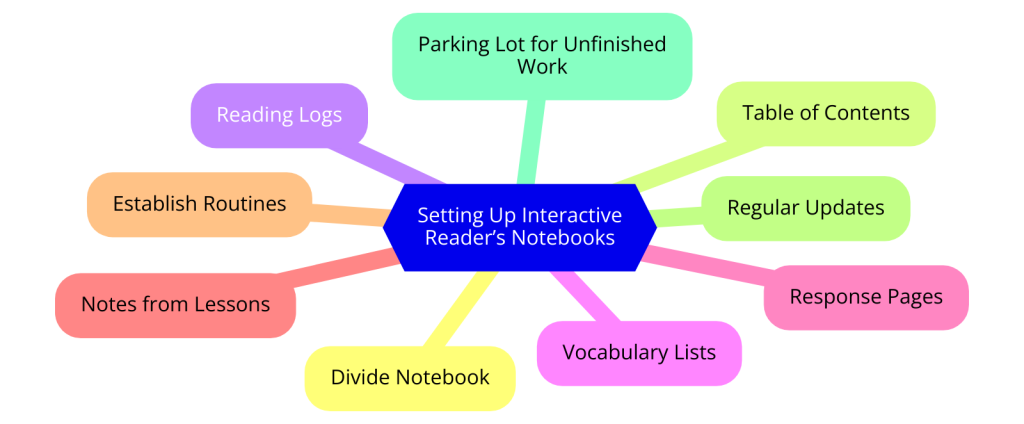
The first step in using IRNs effectively is setting them up in an organized manner. Teachers should help students divide their notebooks into different sections, each dedicated to a specific aspect of their reading work. Common sections include a table of contents, reading logs, vocabulary lists, response pages, and notes from lessons. This organization not only helps students keep their work structured but also makes it easier for them to find information quickly. Teachers can provide students with templates for each section, ensuring consistency and clarity.
In addition to organizing the notebook, it’s important to establish routines for how students will use their IRNs. For example, setting aside regular time for students to update their reading logs, add new vocabulary, and write responses can help ensure that the notebooks are used consistently. Teachers can also create a “parking lot” for unfinished work or loose pieces, using simple tools like envelopes glued to the inside covers of the notebooks to keep materials organized and accessible.
Engaging Students with Interactive Elements
One of the key features of IRNs is their interactive nature. Incorporating elements such as foldables, graphic organizers, and cut-and-paste activities can make the reading process more hands-on and enjoyable. For example, students can create character maps, plot diagrams, and theme trackers to visually represent their understanding of a text. These activities not only enhance comprehension but also allow students to express their creativity. Encouraging students to use different colors, stickers, and drawings can further personalize their notebooks and make them more engaging.
Interactive elements transform passive reading into an active exploration of literature. For instance, students might create a timeline of events for a historical novel or a visual representation of a character’s development throughout a story. These activities require students to engage with the text on a deeper level, promoting better retention and understanding. Additionally, interactive activities can be tailored to different learning styles, ensuring that all students can benefit from the IRNs. For visual learners, the use of graphic organizers and diagrams can make complex information more digestible, while kinesthetic learners can benefit from the hands-on nature of cut-and-paste activities.
Developing Critical Thinking Skills
IRNs are excellent tools for developing critical thinking skills. By providing prompts that require students to analyze characters, infer themes, and make predictions, teachers can encourage deeper engagement with texts. Activities like “Write long off of an important quote” challenge students to delve into the meaning of specific passages and explore their implications. Similarly, using T-charts to compare and contrast characters or events helps students organize their thoughts and develop analytical skills. These exercises push students to go beyond surface-level understanding and consider the broader significance of the texts they read.
Critical thinking activities can be incorporated into IRNs in various ways. For example, after reading a chapter, students might be asked to write about a character’s motivations and how they influence the plot. Another activity might involve examining the setting of a story and discussing how it impacts the characters’ actions and decisions. These activities not only improve comprehension but also help students develop skills that are essential for academic success and personal growth. By regularly engaging in critical thinking exercises, students learn to approach texts with a more analytical mindset, enhancing their overall literacy skills.
Encouraging Reflective Writing
Reflective writing is a crucial component of IRNs. It allows students to process their thoughts and make connections between their reading and their own experiences. Prompts that ask students to reflect on a character’s motivations, the impact of the setting, or the development of a theme can lead to rich, thoughtful entries. Encouraging students to write “last impressions” after finishing a book helps them synthesize their thoughts and consider the lessons learned. Reflective writing not only enhances comprehension but also fosters a personal connection to the material, making reading a more meaningful activity.
Reflection can take many forms in an IRN. For example, students might be asked to write about a time when they faced a challenge similar to a character in a book, exploring how their own experiences relate to the story. Another prompt might involve discussing how a theme in the book resonates with current events or issues in their own lives. By encouraging students to make these connections, teachers can help them develop a deeper understanding of the text and its relevance to their own lives. Reflective writing also encourages students to think critically about their own beliefs and values, promoting personal growth and self-awareness.
Integrating Technology with Interactive Reader’s Notebooks
In today’s digital age, integrating technology with IRNs can further enhance the reading experience. Digital notebooks, such as those created using Google Slides, offer flexibility and accessibility. These digital tools allow students to incorporate multimedia elements like videos, audio clips, and images, making their responses more dynamic. Additionally, digital notebooks can be easily updated and shared, facilitating collaboration and feedback. Using technology also prepares students for the digital literacy skills they will need in the future. Teachers can leverage these tools to create a more interactive and engaging learning environment.
Digital IRNs can also support blended and remote learning environments. For example, students can access their digital notebooks from any device, allowing them to continue their work outside of the classroom. Teachers can provide real-time feedback on student entries, and students can collaborate with their peers through shared documents. This flexibility ensures that learning can continue uninterrupted, regardless of where students are physically located. Additionally, digital tools can help students organize their work more efficiently, with features like search functions and hyperlinks making it easier to navigate their notebooks.
Supporting Independent Reading
IRNs are particularly effective in supporting independent reading. By giving students ownership of their notebooks, teachers can encourage a sense of responsibility and pride in their work. Students can use their IRNs to track their reading progress, set goals, and reflect on their growth as readers. Providing prompts and activities that align with independent reading books helps students stay engaged and think critically about their choices. Furthermore, IRNs can serve as a valuable tool for assessment, allowing teachers to monitor student progress and provide targeted feedback. This support fosters a love of reading and encourages lifelong learning habits.
To support independent reading, teachers can create activities and prompts that align with the students’ chosen books. For example, students might be asked to create a character map for a book they are reading independently, tracking the development of the protagonist throughout the story. Another activity might involve writing a book review or creating a visual representation of the setting. By aligning IRN activities with independent reading, teachers can help students make connections between their reading and the skills they are developing in class. This approach not only enhances comprehension but also fosters a deeper engagement with reading as a personal and enjoyable activity.
In Conclusion
Enhancing literacy with Interactive Reader’s Notebooks involves creating an organized, interactive, and reflective space for students to engage with texts. By incorporating interactive elements, encouraging critical thinking, and integrating technology, teachers can transform the reading experience into an active, enjoyable, and meaningful process. IRNs not only improve comprehension and analytical skills but also foster a personal connection to literature, making reading a more engaging and rewarding activity. Through thoughtful implementation and consistent use, Interactive Reader’s Notebooks can significantly enhance literacy and cultivate a lifelong love of reading in students.

Jeffrey Hammel is a chief financial officer in corporate finance with an MBA from Indiana University’s Kelley School of Business. He partners with boards and leadership teams on risk management, M&A integration, business planning, and growth—and is known for building trust-based, high-performance cultures.