Strategic planning in the educational sector stands as a cornerstone for guiding institutions toward their ultimate goals, enhancing student outcomes, and ensuring overall institutional success. The significance of strategic planning cannot be overstated—it acts as a compass for educational leaders, providing direction amidst the ever-evolving landscape of education. This process aligns an institution’s mission with its operational activities, ensuring that every resource is effectively utilized towards achieving long-term objectives.
The purpose of strategic planning in education extends beyond mere organizational alignment; it encompasses the engagement of all stakeholders, the optimization of resources, and the establishment of a culture that prizes continuous improvement. Through strategic planning, educational institutions can navigate the complexities of modern education, adapt to changes, and address the diverse needs of their students. This proactive approach allows for the identification of opportunities for growth and innovation, making it an indispensable tool for any educational leader seeking to excel in their role.
This article aims to provide readers with a deep dive into the processes, components, and strategies essential for effective strategic planning in education. From understanding the educational landscape to developing a comprehensive strategic plan, the insights offered will equip educational leaders with the knowledge necessary to lead their institutions towards success. Through a detailed exploration of each step in the strategic planning process, readers will gain a robust understanding of how to create a plan that is not only achievable but also inspiring and aligned with their institution’s goals.
Laying the Foundation for Strategic Planning
Understanding the Educational Landscape
Comprehending the current educational trends, challenges, and opportunities is a critical first step in the strategic planning process. This understanding forms the foundation upon which a successful plan is built, as it enables educational leaders to tailor their strategies to meet the specific needs of their institution. From technological advancements and shifts in teaching methodologies to changes in regulatory environments and student demographics, the educational landscape is constantly evolving. By staying informed and responsive to these trends, educational institutions can ensure their strategic plan remains relevant and effective.
Engaging Stakeholders in the Planning Process
Involving faculty, staff, students, and the community in the strategic planning process is essential for garnering widespread support and ensuring a diversity of perspectives. Stakeholder engagement fosters a sense of ownership and commitment to the strategic plan, making its implementation more smooth and successful. By actively seeking input from all members of the educational community, leaders can develop a more comprehensive and inclusive plan. This collaborative approach not only enhances the quality of the strategic plan but also strengthens the institution’s culture, promoting a shared vision for the future.
Developing Your Strategic Plan
Setting Vision, Mission, and Goals
Crafting clear, achievable, and inspiring vision and mission statements is a pivotal element of any strategic plan. These statements serve as the guiding light for the institution, articulating its core values and aspirations. Alongside these, setting SMART goals—specific, measurable, achievable, relevant, and time-bound—provides a framework for measuring progress and success. These goals should reflect the strategic priorities of the institution, addressing key areas for improvement and development. A well-defined vision, mission, and set of goals ensure that the entire educational community is aligned and working towards common objectives.
Conducting a SWOT Analysis
A Strengths, Weaknesses, Opportunities, and Threats (SWOT) analysis is a crucial tool for informing strategic priorities. This analysis offers a comprehensive overview of the institution’s internal strengths and weaknesses, as well as external opportunities and threats. By identifying these factors, educational leaders can make informed decisions about where to allocate resources and how to position their institution for success. A SWOT analysis encourages strategic thinking, helping leaders to capitalize on their institution’s strengths, address its weaknesses, seize opportunities, and mitigate potential threats. This strategic assessment lays the groundwork for developing actionable strategies that will drive the institution towards achieving its vision and goals.
Strategic Planning in Education: Navigating Towards Success
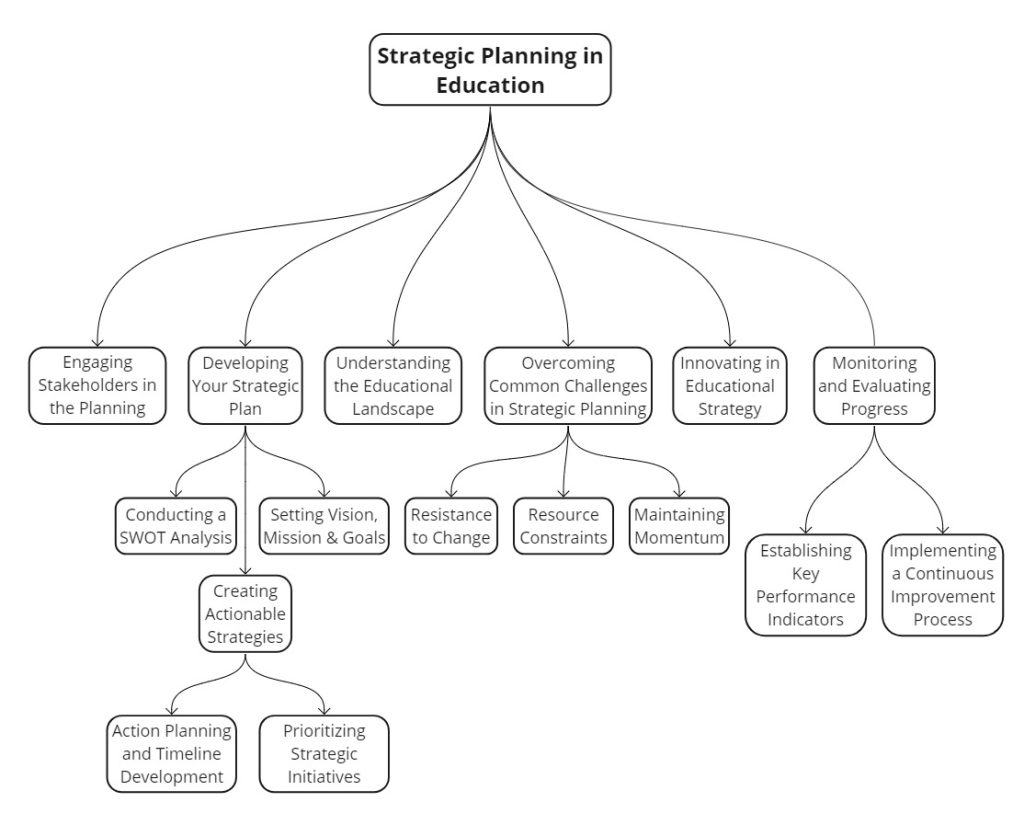
The importance of strategic planning in the educational sector has never been more critical. As institutions navigate through an ever-evolving educational landscape, the need for a coherent and forward-thinking approach to ensure success and sustainability is paramount. The “Strategic Planning Roadmap” diagram presents a holistic view of the strategic planning process, encapsulating the essential steps and considerations for educational leaders embarking on this pivotal journey.
Starting with an understanding of the current educational landscape, the roadmap emphasizes the significance of engaging all stakeholders in the planning process, fostering a collaborative and inclusive environment. As the journey unfolds, it delves into the development of a strategic plan, highlighting the importance of setting clear vision, mission, and goals, conducting a SWOT analysis, and creating actionable strategies.
Prioritizing strategic initiatives and developing detailed action plans ensures that resources are allocated efficiently, driving the institution toward its objectives. The roadmap also underscores the importance of monitoring progress through key performance indicators and embracing a culture of continuous improvement to adapt to changes and seize new opportunities.
Moreover, the diagram points to the need for innovation in educational strategy and the readiness to address common challenges such as resistance to change and resource constraints. By providing a visual guide to strategic planning in education, this roadmap serves as a valuable tool for educational leaders aiming to chart a course toward excellence, innovation, and long-term success. Through strategic planning, institutions can achieve their goals, enhance student outcomes, and make a lasting impact on the educational landscape.
Creating Actionable Strategies
Prioritizing Strategic Initiatives
In the dynamic world of education, not all initiatives can be pursued simultaneously due to limitations in resources and time. Prioritizing strategic initiatives becomes a critical step in ensuring that efforts are directed towards activities with the highest potential impact and feasibility. The process begins with a comprehensive evaluation of all proposed initiatives, assessing their potential benefits against the backdrop of the institution’s strategic goals and objectives. This assessment considers various factors, including the initiative’s alignment with the institution’s vision, its potential to enhance student outcomes, and its feasibility in terms of available resources and time constraints.
Effective prioritization involves categorizing initiatives into tiers based on their importance and urgency. This tiered approach helps educational leaders make informed decisions about where to allocate limited resources to achieve the maximum benefit. It’s crucial to remain flexible and adaptable during this process, as priorities may shift in response to changing circumstances or new opportunities. By focusing on high-impact, feasible initiatives, institutions can make significant strides towards realizing their strategic vision.
Action Planning and Timeline Development
Once strategic initiatives have been prioritized, the next step is to develop detailed action plans and timelines for their implementation. This involves breaking down each initiative into actionable steps, assigning responsibilities to specific individuals or teams, and setting clear deadlines for completion. Action plans serve as a roadmap, guiding the institution through the implementation process and ensuring that everyone involved understands their role and responsibilities.
Developing a realistic timeline is crucial for maintaining momentum and ensuring progress. It’s important to set achievable deadlines that account for potential challenges and delays, while also providing enough flexibility to adapt to unforeseen circumstances. Establishing benchmarks along the way allows for ongoing monitoring of progress and helps keep the implementation on track. By meticulously planning each step of the implementation process, educational institutions can effectively transform their strategic visions into reality.
Monitoring and Evaluating Progress
Establishing Key Performance Indicators (KPIs)
Key Performance Indicators (KPIs) are essential tools for monitoring and evaluating the progress of strategic initiatives. Selecting the right KPIs requires a deep understanding of the institution’s strategic goals and the specific outcomes that each initiative aims to achieve. Effective KPIs are measurable, directly aligned with strategic objectives, and provide clear indicators of success or areas needing improvement.
The process of selecting KPIs involves identifying both qualitative and quantitative measures that can accurately reflect the impact of strategic initiatives. For example, in the context of improving student outcomes, relevant KPIs might include graduation rates, student satisfaction scores, or employment rates of graduates. Regularly tracking these indicators allows educational leaders to assess the effectiveness of their strategies and make data-driven decisions.
Implementing a Continuous Improvement Process
The landscape of education is constantly evolving, necessitating a commitment to continuous improvement. Regular reviews and feedback loops are critical components of this process, enabling institutions to assess the effectiveness of their strategic initiatives and make necessary adjustments. This iterative process involves analyzing performance data, soliciting feedback from stakeholders, and identifying areas for enhancement.
Implementing a continuous improvement process requires a culture that values feedback and is open to change. Educational leaders play a key role in fostering this culture, encouraging open communication, and demonstrating a willingness to adapt strategies based on performance data. By embracing a continuous improvement mindset, institutions can ensure that their strategic planning efforts remain relevant and responsive to the needs of their students and the broader educational community.
Innovating in Educational Strategy
Innovation and technology have the power to transform educational institutions, offering new ways to enhance learning outcomes and operational efficiency. Incorporating innovation into strategic planning involves more than just adopting the latest technologies; it requires a fundamental shift in thinking, embracing new pedagogical approaches, and reimagining the future of education.
Case studies of successful transformation in educational institutions often highlight the importance of a visionary leadership and a strategic approach to innovation. For example, institutions that have successfully integrated digital learning platforms have not only improved access to education but have also enhanced the learning experience, enabling personalized learning paths and interactive learning environments.
Furthermore, innovation in educational strategy can extend beyond teaching and learning to include administrative processes, where technology can streamline operations and improve service delivery. By adopting a strategic approach to innovation, educational leaders can ensure that their institutions remain at the forefront of educational excellence, prepared to meet the challenges and opportunities of the future.
Strategic planning in education is a comprehensive and dynamic process that encompasses understanding the educational landscape, engaging stakeholders, developing and implementing actionable strategies, and committing to continuous improvement. By prioritizing initiatives, establishing clear action plans, monitoring progress through KPIs, and embracing innovation, educational institutions can navigate the complexities of the 21st century and achieve their strategic goals, ensuring success for their students and the broader educational community.
Overcoming Common Challenges in Strategic Planning
Strategic planning in the educational sector is a complex and nuanced process, fraught with challenges that can hinder progress. Recognizing and addressing these obstacles is crucial for the success of any strategic plan. Here, we explore some of the most common challenges faced during strategic planning in education, along with strategies for overcoming them.
Resistance to Change
One of the most pervasive challenges in strategic planning is resistance to change. Change can be unsettling, and it’s natural for individuals within an institution to feel apprehensive about new directions or practices. Overcoming this resistance involves clear communication, involving stakeholders in the planning process, and demonstrating the benefits of change. It’s essential to create a culture that values adaptability and innovation, where the educational community is encouraged to embrace new opportunities for growth and improvement.
Resource Constraints
Resource constraints, including limited financial, human, and physical resources, can significantly impact the implementation of a strategic plan. Addressing this challenge requires creative resource management, such as prioritizing initiatives that offer the highest value, seeking alternative funding sources, and leveraging technology to optimize efficiency. Strategic partnerships with other institutions and organizations can also provide valuable resources and support.
Maintaining Momentum
Keeping the momentum going throughout the strategic planning process can be challenging, especially in the face of setbacks or slow progress. To maintain momentum, it’s important to set realistic goals and timelines, celebrate short-term wins, and keep the long-term vision in focus. Regularly revisiting and revising the strategic plan can help ensure it remains relevant and aligned with the institution’s goals, keeping the educational community engaged and motivated.
FAQs on Strategic Planning in Education
What are the best practices for strategic planning in education?
Best practices in strategic planning include engaging a broad range of stakeholders in the planning process, conducting thorough environmental scans to inform the plan, setting clear and measurable goals, and establishing a flexible and iterative planning process that allows for continuous improvement.
How can we engage the school community in the strategic planning process?
Engaging the school community in strategic planning involves clear and open communication, providing opportunities for input and feedback, and involving representatives from different stakeholder groups in planning committees or task forces. Transparency throughout the process and demonstrating how feedback is incorporated into the plan can also foster a sense of ownership and commitment among all stakeholders.
How do we ensure the strategic plan remains relevant and dynamic?
Ensuring the strategic plan remains relevant and dynamic requires regular review and assessment, flexibility to adapt to changing circumstances, and an ongoing commitment to stakeholder engagement. Incorporating regular feedback loops, benchmarking against industry standards, and staying abreast of trends in education can help keep the plan aligned with both internal goals and external realities.
In Conclusion
Strategic planning in the educational sector is a critical process that requires thoughtful consideration, collaborative effort, and a commitment to continuous improvement. By addressing common challenges such as resistance to change, resource constraints, and maintaining momentum, and by answering key questions from the educational community, institutions can develop and implement effective strategic plans. These plans not only guide the institution towards achieving its goals but also ensure that it can adapt and thrive in an ever-changing educational landscape. Ultimately, strategic planning is not just a task to be completed but a vital, ongoing process that shapes the future of educational institutions and the success of their students, making it essential for educational leaders to approach this process with diligence, foresight, and an open mind.

Jeffrey Hammel is a chief financial officer in corporate finance with an MBA from Indiana University’s Kelley School of Business. He partners with boards and leadership teams on risk management, M&A integration, business planning, and growth—and is known for building trust-based, high-performance cultures.