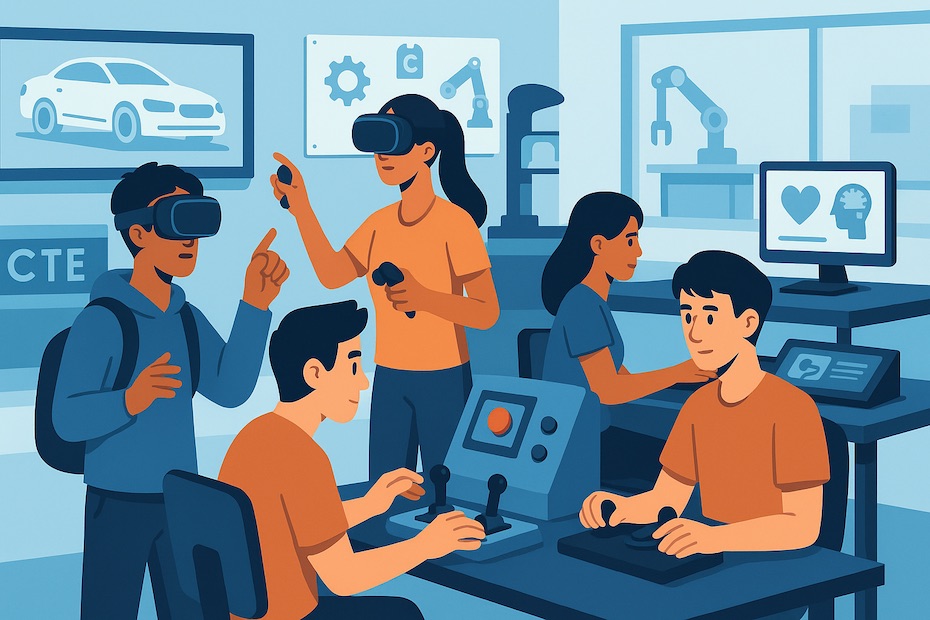
Hands-On Learning 2.0 refers to the integration of modern digital tools—such as VR, AR, and AI—into Career and Technical Education (CTE) to improve real-world skill acquisition, student engagement, and career readiness.
Career and technical education is no longer confined to workbenches and labs. Today, you’re equipping students with high-demand skills through cutting-edge simulations, digital certifications, and virtual labs that reflect real industry standards. This article explores how modern technology is reshaping CTE classrooms, what it means for your students, and how you can lead implementation with clarity and purpose.
What is Hands-On Learning 2.0?
You’re not just teaching trade skills—you’re teaching adaptability and precision. Hands-On Learning 2.0 adds digital immersion to traditional training by incorporating tools like VR welding modules, AR-assisted automotive diagnostics, and cloud-based performance tracking. These platforms allow students to practice tasks repeatedly in a risk-free environment and receive instant feedback.
This isn’t about replacing real tools with digital ones. It’s about giving students more opportunities to master skills before stepping onto a job site. When you integrate digital systems into your programs, students become more confident, more accurate, and more prepared. They also gain exposure to the kind of tech they’ll actually use in the workforce.
How Does Technology Improve CTE Student Outcomes?
You’ve probably seen what happens when students use VR to simulate a live engine teardown or when health science students explore 3D anatomy models before touching a patient. It builds retention. Students stay engaged because the learning feels real. There’s an increase in self-motivation, fewer injuries, and measurable improvements in concept comprehension.
When schools implement AR/VR across programs—whether it’s construction safety, HVAC systems, or robotics—student pass rates and certification success rates go up. Digital labs also allow learners to make mistakes safely, which builds problem-solving skills. If you’ve ever struggled to reach students who don’t thrive with traditional instruction, this is the bridge.
What Tools Are Driving This Transformation?
You’ve got options. VR platforms like zSpace offer real-time simulations in health sciences, agriculture, and engineering. Companies like Virti add artificial intelligence to soft skills training, coaching students through team communication or high-pressure scenarios. Augmented reality is being used for automotive repair, allowing students to overlay instructions directly on machines.
Then you have LMS-integrated credentialing platforms, which allow students to earn industry-recognized certifications without leaving the classroom. Tools like Labster, which simulate scientific experiments, and ClassVR, which immerses students in manufacturing or engineering environments, are already being used across the country. These tools aren’t gimmicks—they’re instructional enhancements that match how today’s students learn.
How Are Schools Implementing These Tools?
You’re not expected to go from zero to full VR lab overnight. Most districts begin with pilot programs. Start small—one classroom, one teacher, one skill set. From there, you can assess performance, gather student feedback, and work out the technical challenges. Flexibility in scheduling, storage for devices, and IT support are must-haves.
The key is professional development. Don’t just hand out headsets. Your instructors need hands-on training themselves. Whether you’re sending them to national CTE conferences or bringing in certified trainers, investing in teacher confidence is what ensures student success. And yes, seek out Perkins V funds or regional grants—they’re designed for exactly this kind of innovation.
What Do Employers Think of Tech-Integrated CTE?
You don’t have to convince industry—they’re already on board. Employers want candidates who understand modern machinery, software protocols, and industry safety. They expect students to show up knowing how to use diagnostic tools, not just with theory. Digital integration gives your students this competitive edge.
Many companies are eager to partner with schools, offering equipment donations, curriculum input, and even virtual tours or job-shadowing experiences through VR. When your CTE program mirrors the actual workflow of a jobsite, employers trust your graduates more. That means stronger placement, better internship pipelines, and long-term hiring relationships.
How Do You Measure Success?
Metrics matter. You should be tracking credential acquisition rates, job placement stats, dual-enrollment progress, and student satisfaction. But also watch for the more subtle signs—higher attendance, better classroom behavior, and improved teamwork. Students who feel competent are more likely to stay engaged and pursue further certifications.
Your ROI becomes visible when students outperform peers in technical interviews, or when apprenticeship coordinators ask for more of your graduates. It also shows up when students share how simulation-based training made them feel prepared from day one on the job. Those stories carry weight when reporting results to the board or applying for grants.
Are There Equity Considerations?
You have to be careful not to widen the digital divide. Ensure every student—not just those in affluent districts—has access to the same level of equipment and instruction. Cloud-based tools help. They allow students to continue learning at home or in community spaces, leveling the playing field.
Equity also includes English language learners, students with disabilities, and nontraditional learners. Many VR platforms come with multi-language support and accessibility options. If you’re building a future-ready program, make sure it serves the whole student body, not just the top third.
Top Benefits of Hands-On Learning 2.0
- Improves skill retention
- Increases safety in training
- Boosts student engagement
- Provides real-time feedback
- Aligns with industry standards
What Should You Do Next?
If you’re considering updating your CTE curriculum, start by identifying which industry sectors are most in-demand locally. Then, explore tools that enhance those programs. Set aside budget for teacher training and secure buy-in early by inviting staff to lead pilot initiatives. Document the process. Share the results. Let your outcomes advocate for you.
In Conclusion
You’re leading a generation into careers that demand both hands-on skill and digital fluency. With Hands-On Learning 2.0, you have the power to bridge education with employment more effectively than ever. By integrating the right tools, training your instructors, and staying aligned with employer needs, you’ll graduate students who are job-ready—and confident in what they bring to the table.
“As a strong believer in future-focused education, I’ve seen how tools like VR and AR are transforming career training in real time. In my latest article, I dive into how Hands-On Learning 2.0 boosts student engagement and job readiness through immersive technology. Read more on my Quora profile.”

Jeffrey Hammel is a chief financial officer in corporate finance with an MBA from Indiana University’s Kelley School of Business. He partners with boards and leadership teams on risk management, M&A integration, business planning, and growth—and is known for building trust-based, high-performance cultures.